
Quality & Statistics · Capability
Cp and Cpk: spread versus centering
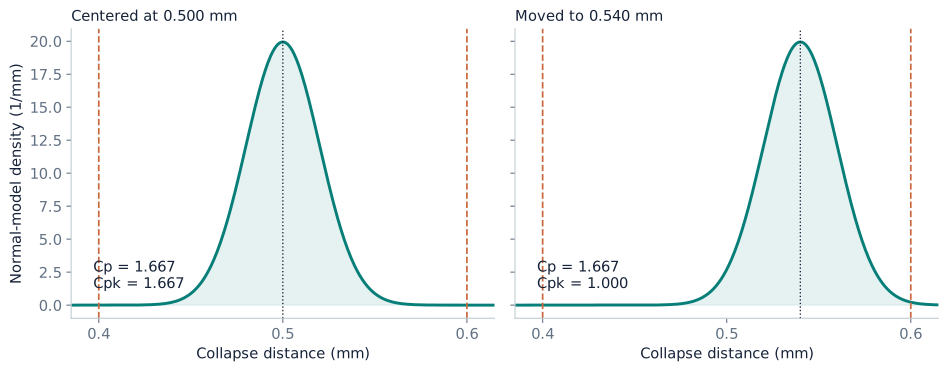
A weld-collapse example shows why a narrow spread can still sit too close to a specification limit.
The Mechatrovich blog connects engineering methods to working tools, explains product decisions, shares practical knowledge, and documents observations worth keeping.
A weld-collapse example shows why a narrow spread can still sit too close to a specification limit.
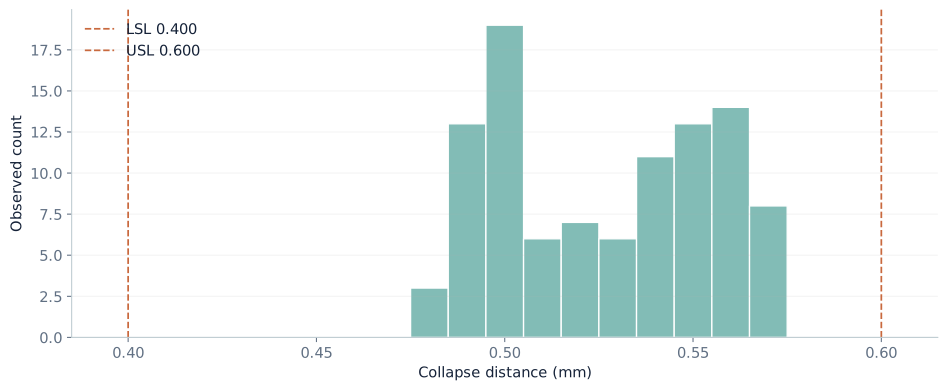
Calculate the overall standard deviation and both performance indices from 100 weld measurements.
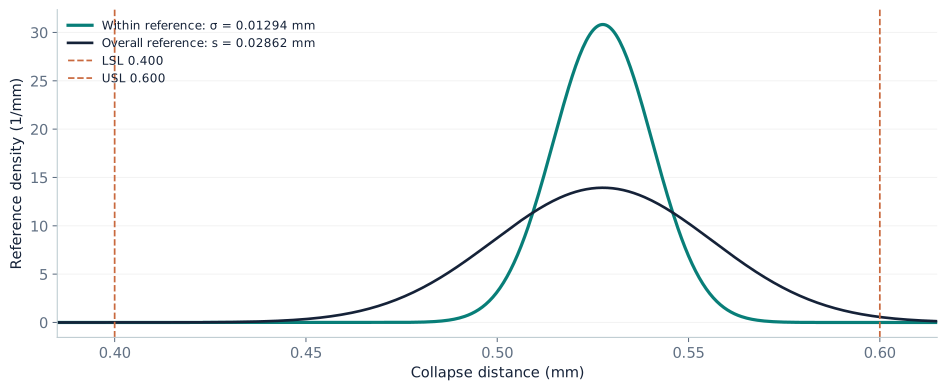
Follow the time sequence to see why local variation and overall variation tell different stories.
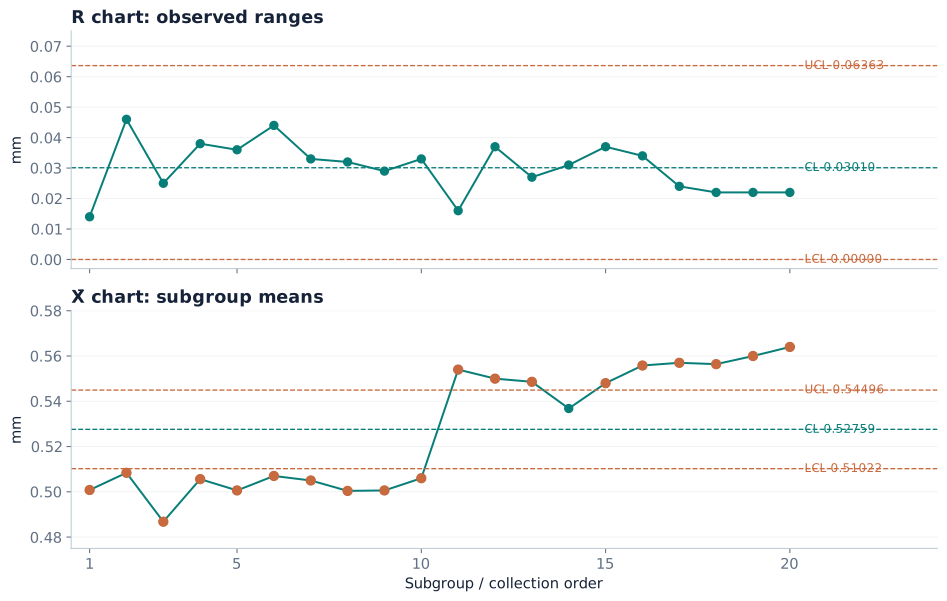
Use the graphs, study conditions and requirements to decide what the capability results support.
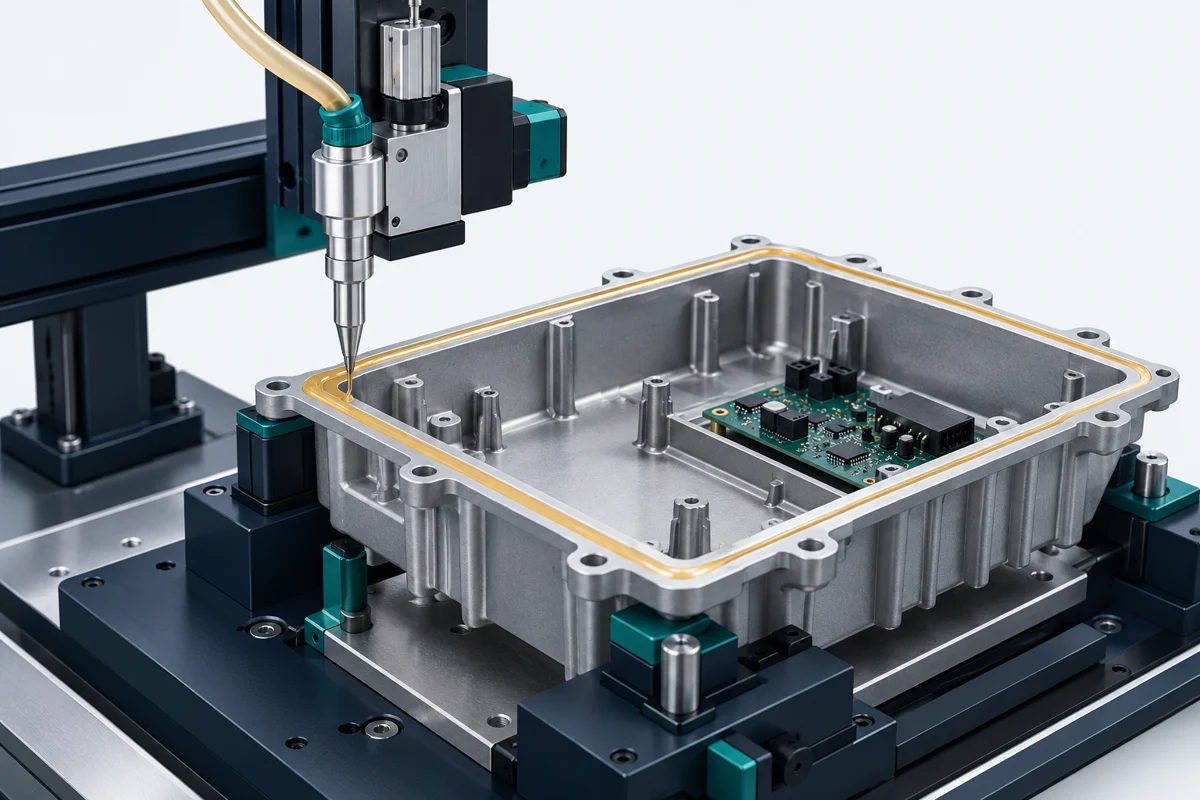
Follow the measurements through subgroup sampling, both control charts, investigation and verification.
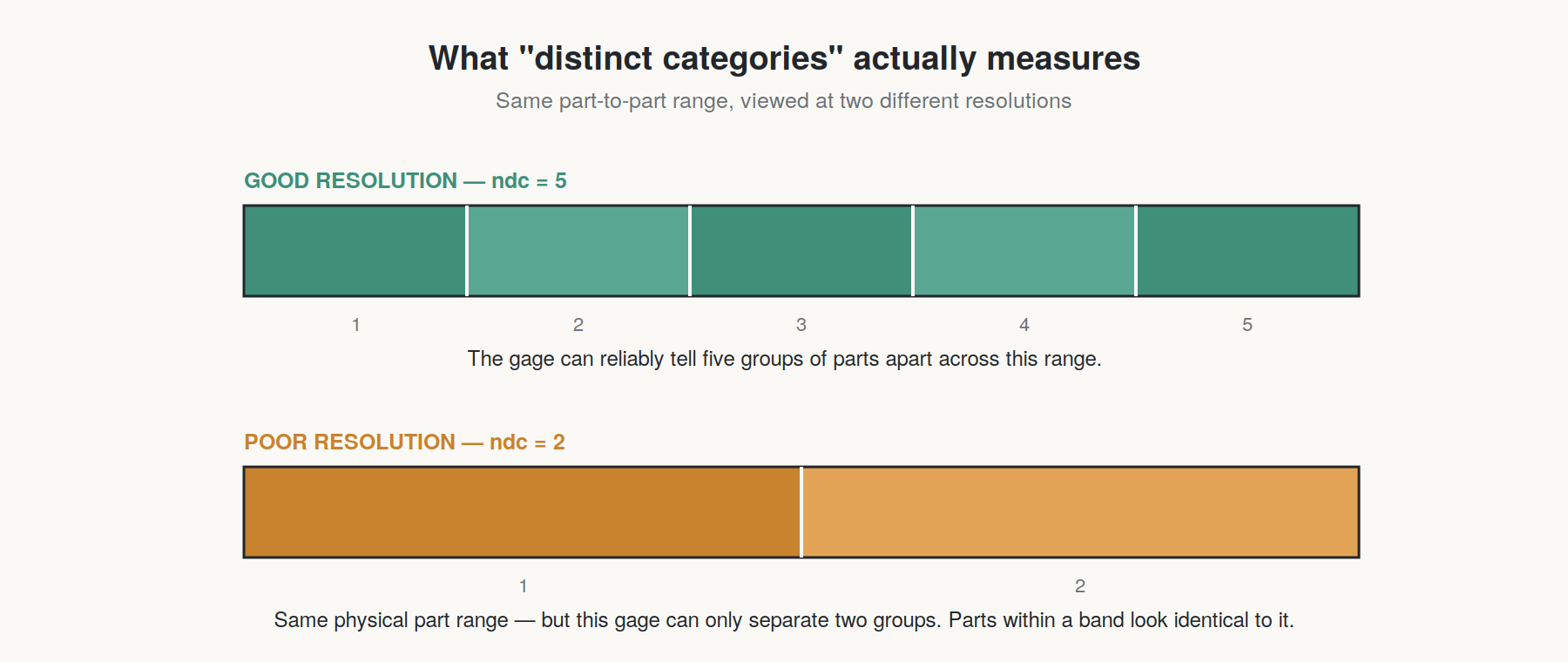
Why %GRR can look acceptable while the measurement system still cannot separate enough distinct part categories.
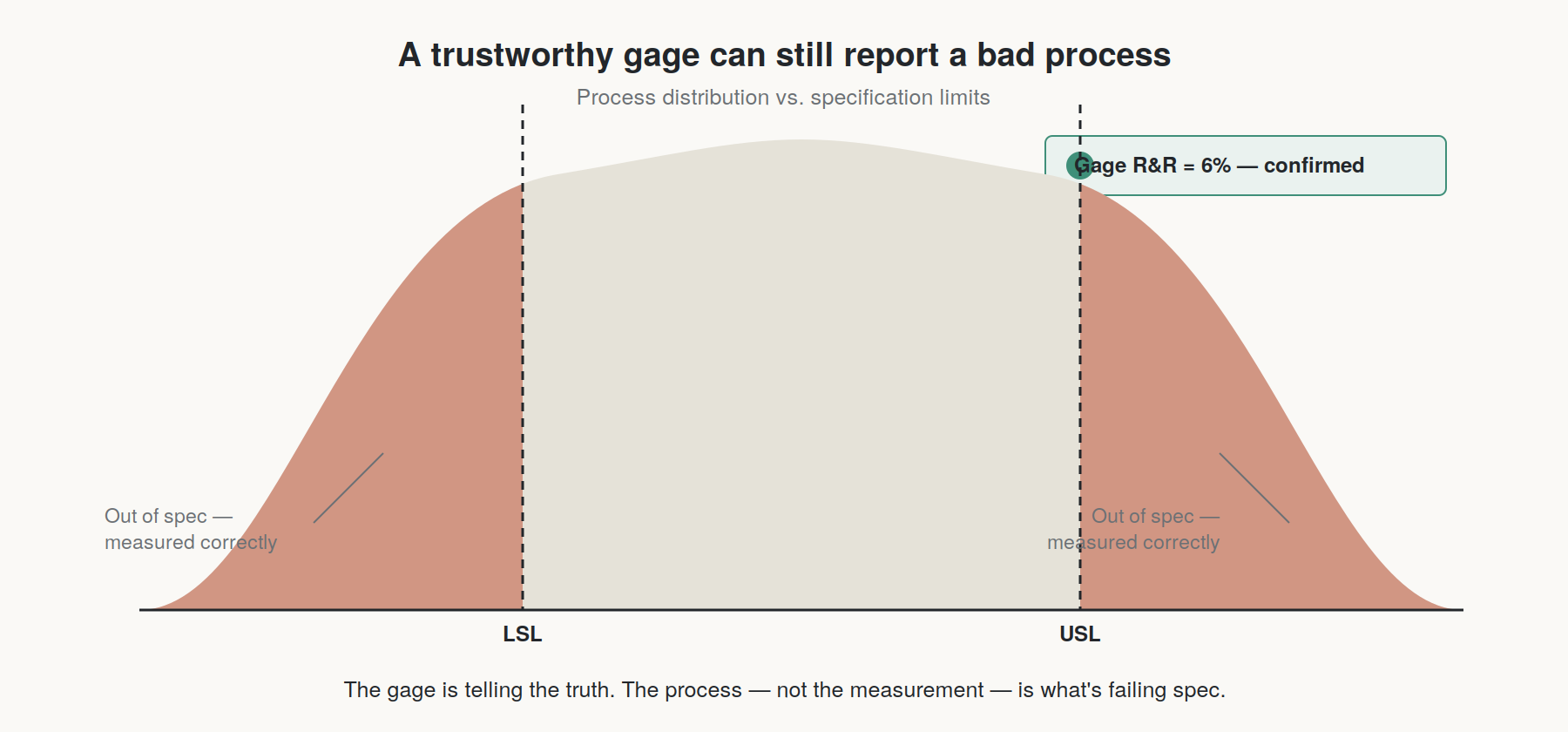
Why a trustworthy measurement system can correctly report a process that is off-center or too variable for specification.
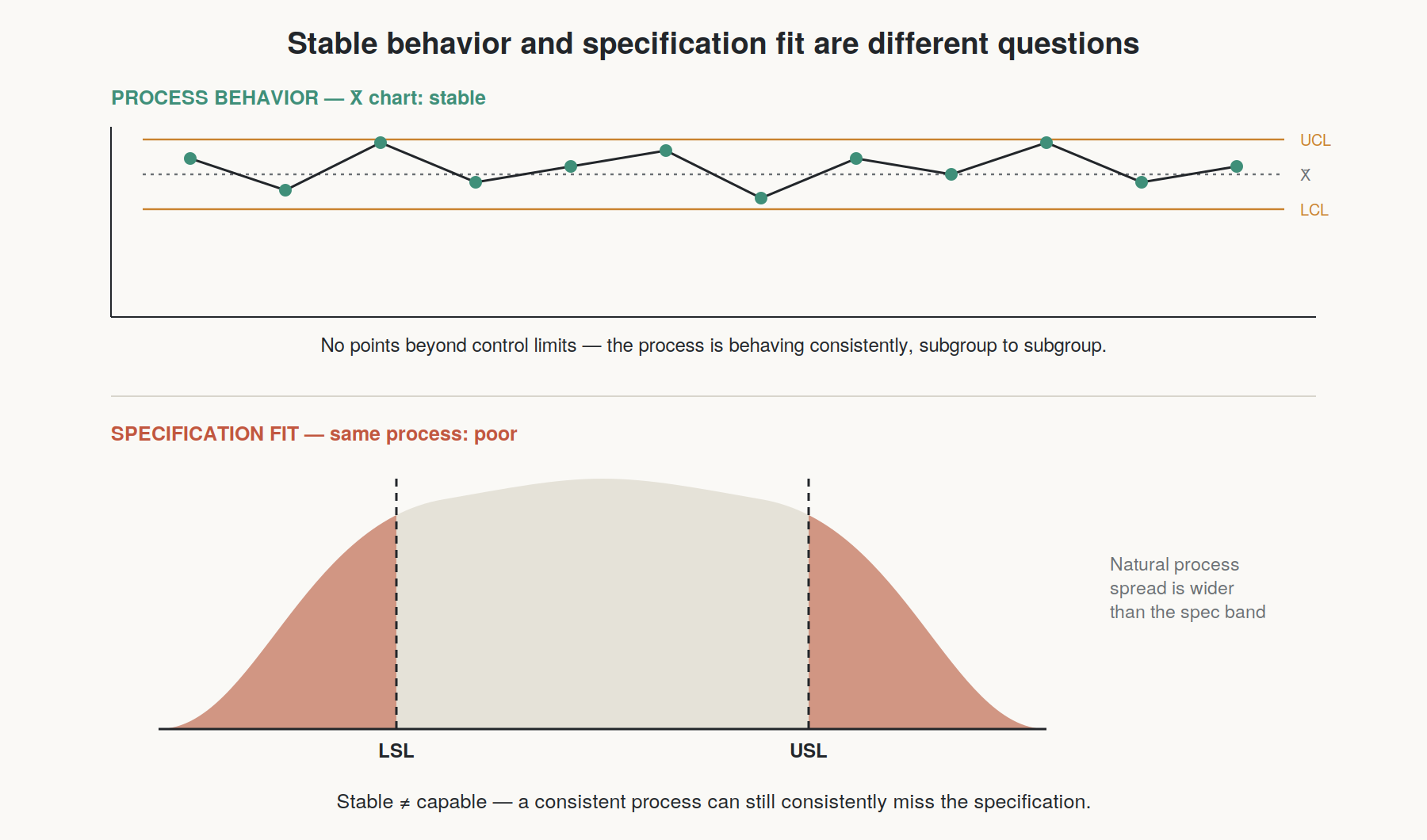
Why statistical stability describes consistent behavior—not whether the process distribution fits specification.
Understand potential capability, process centering, and why a stable process should come before the final capability conclusion.
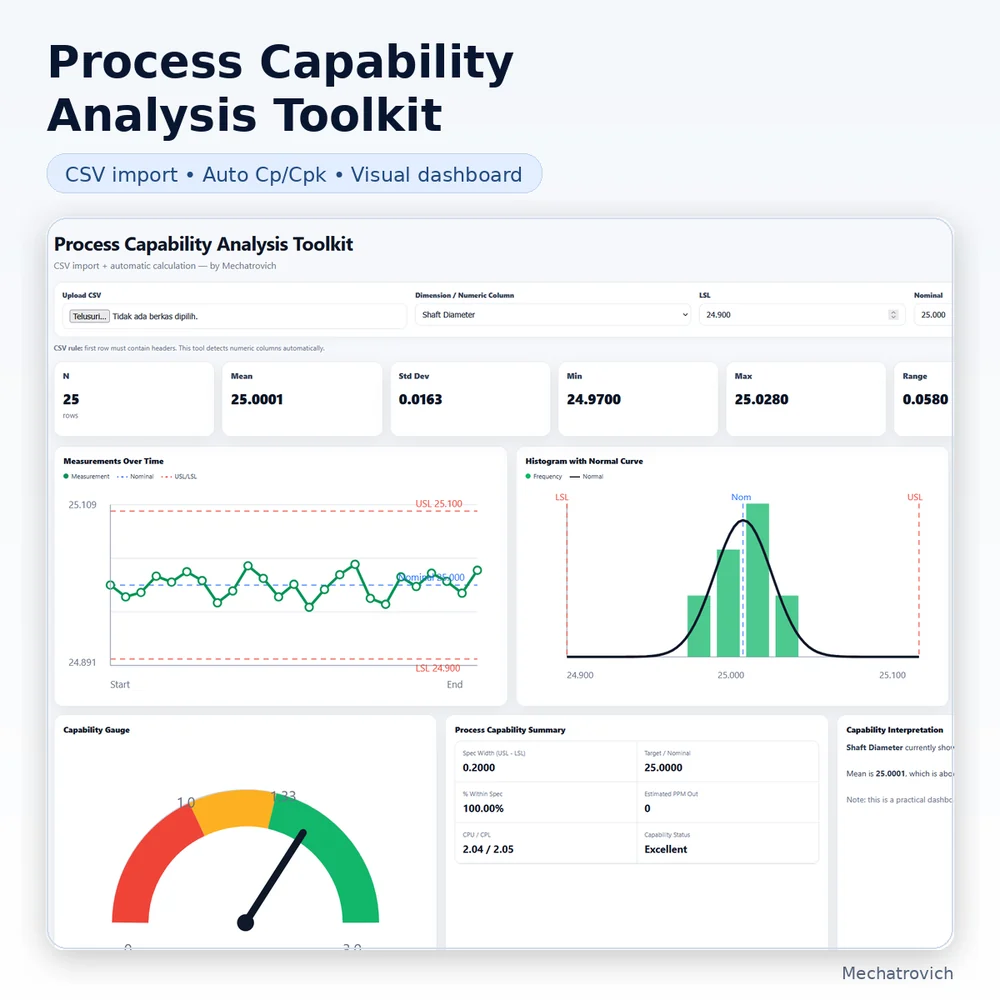
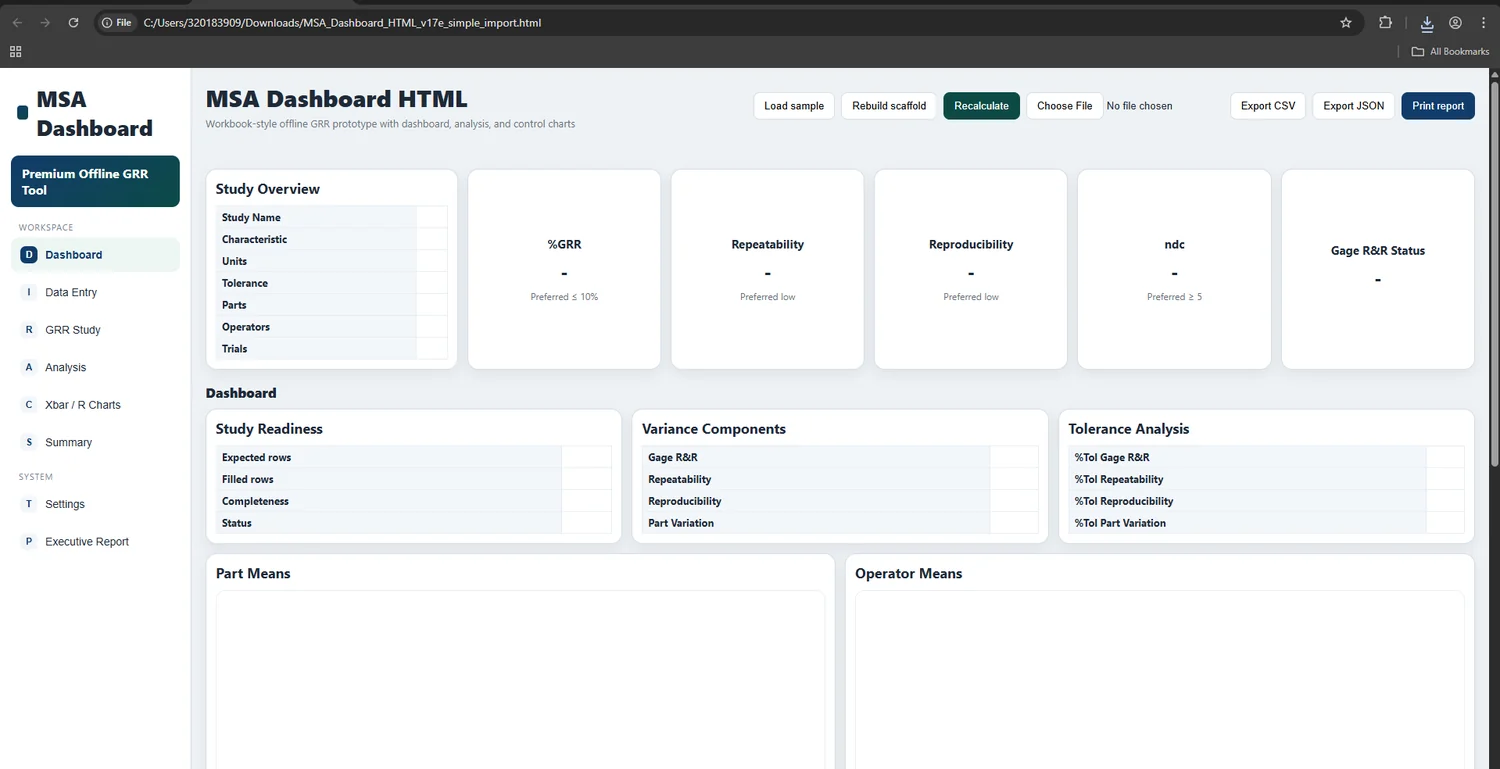
Follow 20 measurements through repeatability, reproducibility, Total GRR, part variation, %Study Variation, and ndc—then reproduce the result in the calculator.
A practical introduction to repeatability, reproducibility, %GRR, variance components, and number of distinct categories.
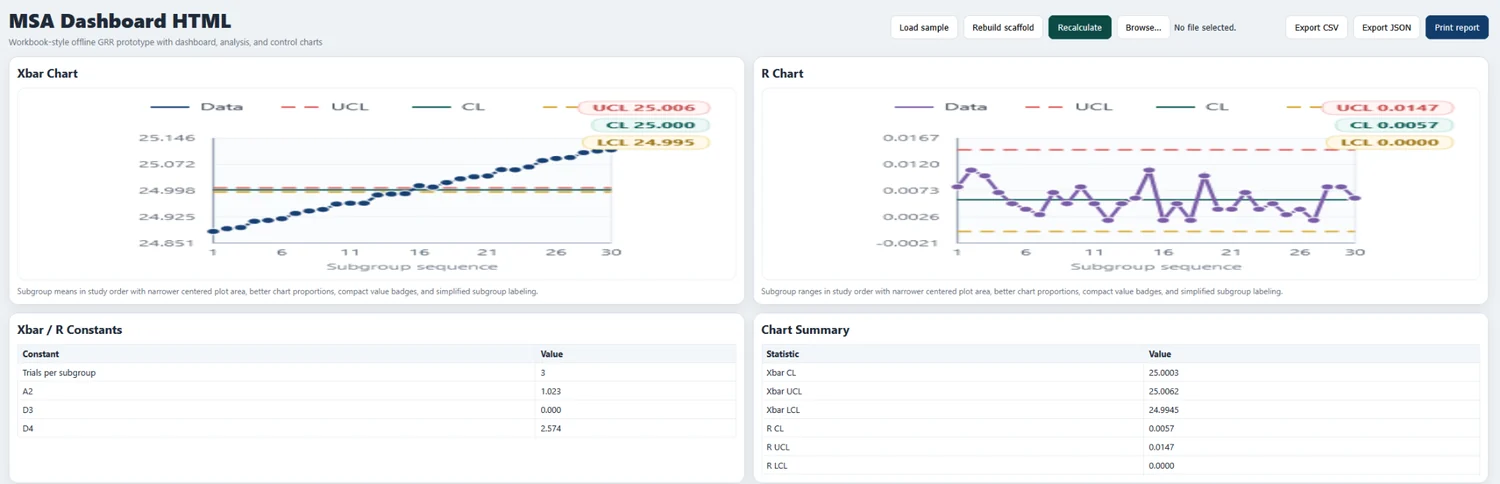
Why subgroup logic, data order, and enough subgroups matter before interpreting calculated control limits.
How armature voltage, field flux, load torque, and PWM affect DC motor speed—and what each control method trades away.
Header detection, numeric-column mapping, specification checks, and row traceability in a practical inspection workflow.
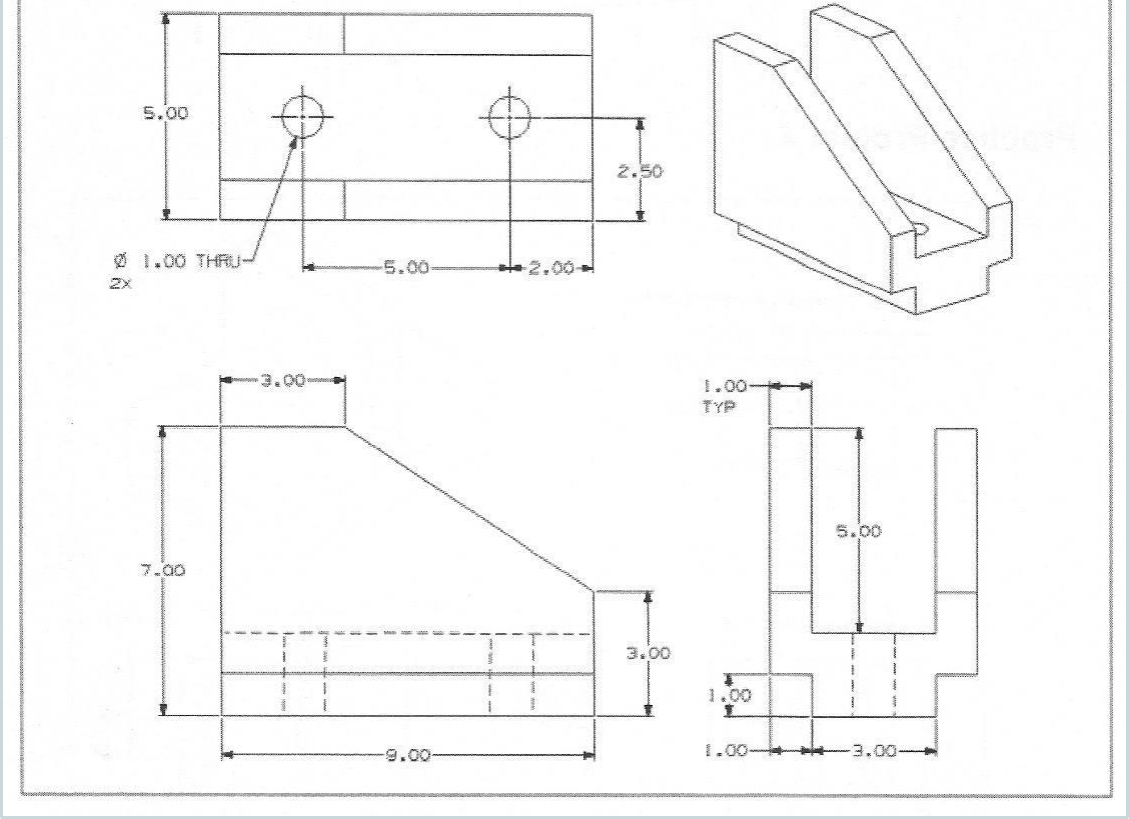
Model a real part from a dimensioned drawing, with progressive hints, a recommended feature sequence, and a downloadable exercise sheet.